
Metal detectors are used to identify and remove metal contaminants in the food processing industry. Their primary purpose is to protect consumers from metal particles that can inadvertently enter the food during production. The careful elimination of these contaminants not only safeguards consumers but also protects brand integrity, which is vital for manufacturers to comply with regulations. Metal detectors help prevent costly product recalls due to metal contamination, while also increasing productivity, enhancing food safety, and meeting complex compliance requirements.
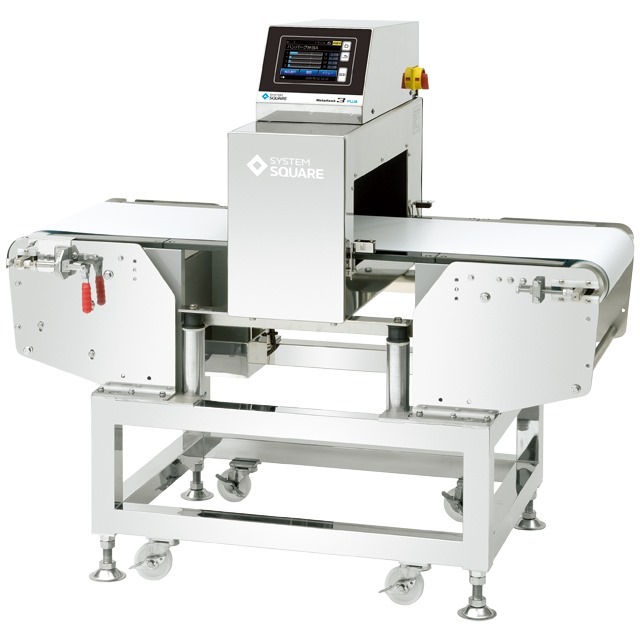
Metal contamination is a critical concern in food manufacturing, where unwanted metal particles can enter products during processing, handling, or packaging. A metal detector for food industry applications helps identify potential metal contaminants before products reach consumers. As a result of incorporating relevant detection devices into the production line, more efforts for quality assurance, increasing food safety levels, and minimizing the risk of product recalls can be made.
Being a company founded in 2012 in Sharjah, UAE, Codpac FZC offers a wide range of filling, packaging, coding, and inspection equipment for industrial use. Metal detectors provide technology that is water-resistant, built with hygienic construction, and allows multiple handling types.
Food processing devices are expected to facilitate cleaning while ensuring optimal functionality of the equipment. The metal detector features a hygienic design with a stainless steel structure and components selected for environments where cleanliness and moisture resistance are important.
These features help manufacturers assess equipment suitability for production areas with frequent cleaning requirements.
Detection performance depends on the product being inspected, the type and size of the contaminant, packaging characteristics, and operating conditions. The supplied baseline sensitivity values for a 350 × 150 mm aperture are:
| Metal Type | Basic Sensitivity |
|---|---|
| Ferrous (FE) | 0.6 mm |
| Non-ferrous | 1.0 mm |
| Stainless Steel (SS) | 1.3 mm |
Real-time product detection capabilities may differ, with supplied values demonstrating a range of 0.5–2.0 mm depending on the product. These figures should therefore be confirmed through application-specific testing rather than treated as guaranteed detection limits for every food product.
Different production lines require different reject devices and conveyor operations. Some configurations include a stainless-steel cross pusher, a retracting belt, and a belt-stop alarm. Choice of a suitable setup depends on the size of a product, speed of the conveyor, packaging design, and what should happen to the rejected item.
A metal detector for food industry production lines can support contamination checks at suitable stages of manufacturing and packaging. The possible uses include:
The final application should be assessed against the product type, packaging material, available installation space, and required inspection point.
Metal detection works best as part of a broader quality management process. Manufacturers should develop the necessary procedures for checking their products and validate their detection methods through adequate testing. Reject mechanisms and alarms should also be verified to ensure that identified products are handled correctly.
Choosing a metal detector for food industry applications involves more than just comparing the sensitivity values. The device must also match the product type, processing environment, cleaning procedures, and existing conveyor systems. An evaluation geared towards the application will ensure that the appropriate configuration is found.
Codpac FZC works with businesses seeking machinery for food processing, packaging, and inspection operations. Share your product details, conveyor dimensions, cleaning requirements, and expected production speed with our team so the equipment configuration can be assessed against your operational needs.
Discuss your application with Codpac FZC: Contact our team to inquire about metal detection equipment for your food production line.
Get in Touch with Codpac FZC